India may have a notion that the worst of an awful loan disaster has passed, but an extreme coin crunch inside the real estate enterprise ought to augur sparkling strife for its banks.
A hunch in the residential assets marketplace leaves many builders struggling to pay off loans to shadow lenders – housing finance companies out of doors the regular banking sector that accounts for over 1/2 of the loans to builders.
With about $10 billion of development loans coming up for repayment in the first 1/2 of 2020, according to Fitch Ratings’ Indian division, the fallout ought to unfold to mainstream banks that have lent money to the shadow creditors or invested in their bonds.
Indian monetary government, which includes the vital bank and government, has stated this year that the banking region’s terrible loans-totaling more than $150 billion-are on the decline for the first time in 4 years after ballooning in the course of a debt crisis.
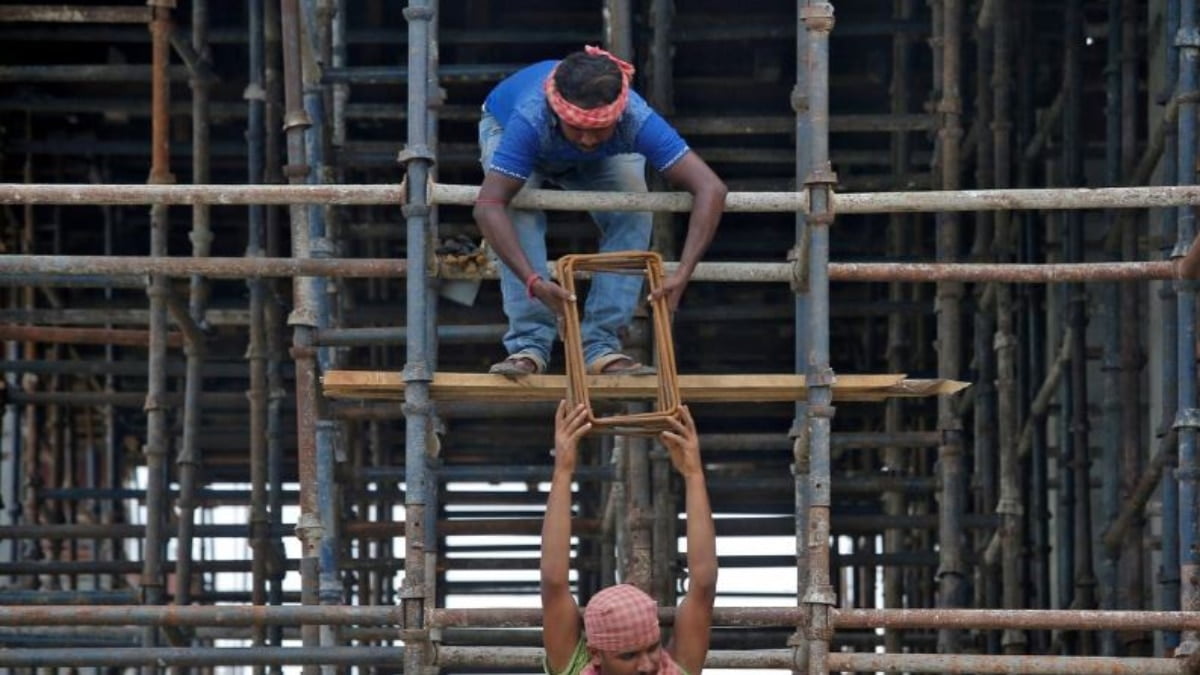
But the range of property developers falling into the financial disaster has doubled during the past 9 months, piling pressure on non-banking finance agencies (NBFCs), normally referred to as shadow lenders.
Potential implosions of these NBFCs could reveal banks, in step with 12 banking and real estate assets.
A senior banking industry reputable, declining to be named due to the sensitivity of the problem, said banks might be laid low with the asset coins crunch in 3 ways: their lending to NBFCs, their direct publicity to developers, and also folks who no longer repay mortgages.
“It could be a triple-whammy,” he said.
While the Indian banking system might be hit by billions of dollars of extra soured debt, the coins crunch within the housing market has levied a toll on human distress. Retired Squadron Leader Krishan Mitroo has paid 90% of the value of his house in Noida, northern India, to developer Jaypee, and the assets changed into speculated to have exceeded five years in the past. However, Jaypee was pressured to put off the assignment and went into insolvency in 2017.
“The task has been caught, and there may be no development at all. Even the financial disaster court has no longer been able to solve the issue thus far; it is simply striking out of thin air,” Mitro said. He did not say how much money he had paid, but residences in that price range range from about $ fifty-six 000,000 to $one hundred forty 000,000. Several such tasks are stuck across u. S. And customers are waiting for new builders to take a hobby and complete them with the desire that their hard-earned cash, which has been caught for years, might not be lost all the time.
BAD LOANS PILE ‘HUGE’
The assets area has been battling a downturn for the closing three years. Things have now, however, hit a vital point due to a liquidity crunch hitting shadow banks, which might be big creditors to each builder and property buyer. As of June 30, 421 realtors have been under the corporate insolvency decision method (CIRP), up from 209 on Sept. 30 final 12 months, information from the Insolvency and Bankruptcy Board of India suggests. Defaults via two housing finance businesses, Dewan Housing Finance Corp and Altico Capital, have increased fears of contagion to the banking system.
Dewan and Altico did not respond to requests for comment.
Shadow creditors can be especially uncovered whilst loans worth roughly seven-hundred billion rupees come up for reimbursement in the first 1/2 of 2020, as many builders might also struggle to pay off, Fitch’s India Ratings said last month.
“The quantity of pressured assets in real property is huge,” stated Rohit Poddar, dealing with a director at Poddar Developers. “The strain now is simply the beginning; only the mid-sized to large builders will survive; others will die.”
If 3-quarters of the excessive-danger category of top-notch actual property loans aren’t repaid, that could cause extra bad debt of $15 billion on banks’ books within the next few years, in line with private studies carried out by one of India’s main actual property consultancies for a global financial consumer, and provided to Reuters.
The Nifty Bank index, which surged in overdue September after the authorities moved to lower company tax costs, gave up more than 1/2 the profits of the one as of Friday. Concerns approximately actual estate loans have been one aspect; in step with analysts, however, the fall is also pushed by low growth in the financial system and the overall worsening asset nice of positive creditors.
Banks’ gross non-performing assets fell to nine. Three o% of general loans as of March, fromeleven .5% a year in advance, in line with the Reserve Bank of India (RBI).
The improvement turned out to be bigger than the RBI had anticipated, having forecast a drop to 10. Three bpercent y March and saying closing December, the ratio had fallen for the primary time since 2015. The principal bank stated in June it predicted awful loans to preserve to fall within the current monetary 12 months, each the ratio and absolute sum.
But India nonetheless has the highest horrific-loan ratio amongst fundamental economies; by way of comparison, Italy, which has experienced a first-rate banking crisis, had a ratio of 9% at the end of the last year.
Yes, Bank and IndusInd Bank have the largest direct exposure to the industrial real property area. They would be susceptible to “asset-fine difficulties” if the actual estate region continues to sluggish, consistent with Moody’s document in mid-September, which also stated other banks, including ICICI Bank and Axis Bank, are in all likelihood to feel the pinch.
The 4 banks did not reply to requests for comment on capacity problems bubbling up from the real estate exposure covered in Moody’s report.
The leader economic officer of a massive public-region financial institution stated the problems emerging in actual property loan payments had been a major cause of worry.
It is uncertain what person banks will do to address the problem. State-owned banks, which dominate the arena, have already acquired tens of billions of dollars from the authorities in recent years to shore up their finances.
International banks have a minimal presence in the Indian market.
JOB LOSSES LOOM
Indian banks’ horrific debt pile ballooned due to out-of-manipulate lending in 2006-11 when the financial system grew swiftly and beyond that. They underwrote their awful loans for years until they were forced to use the important bank to realize and deal with the issue in 2015.
RBI Governor Shaktikanta Das touched on the real estate problem this month, saying the significant financial institution would be looking at the world as a part of its six-monthly report on the stability of the monetary system. The next report is because of being launched in December.
The RBI declined to make any further comment on banks’ publicity of awful real property loans.
A rebound in the real estate market should regulate the state of affairs, but the outlook calls for an increasing number of bleak prospects. Several enterprise assets said builders have been suffering from dumping houses, even though they may be equipped to provide customers up to 25% reductions on indexed fees.
The state of affairs now is so extreme that actual property inventories throughout India are at an all-time high of nearly four years, and asset costs have no longer risen in most parts of u. S. Within the closing 4-5 years. Projects worth 1. Eight trillion rupees ($25 billion) are stalled across India, according to bthe elonging consultancy firm Anarock.
As builders go to the wall, more than 1/2 1,000,000 direct jobs can be lost in the coming months, the National Real Estate Development Council stated. The wide variety of oblique task losses from associated industries like cement and metal can be even higher.
Slowing sales are piling on the pain, with buyers staying away because an increasing number of them cannot manage to pay for houses. The residence charge-to-profits ratio, which measures the cost of housing versus the trade-in earnings stages, rose from. 1 in March 2015 to 61. Five in March 2019, indicating domestic purchases have become less affordable.
While purchasers are staying away, traders also are wary of residential purchases because of low rental yields and meager-to-terrible capital appreciation.
“Sluggishness in income is, in addition, elevating issues of the borrowers defaulting on the hobby and EMI payments,” stated Parth Mehta, Managing Director, Paradigm Realty.
As the world receives careworn in addition, payments to creditors are likely to get hit in addition, and banks might be more and more unwilling to lend to asset financiers and developers.
Pankaj Kapoor, the leader of the government of real estate consultancy firm Liases Foras, described the cash crunch within the area as a “bloodbath” that might become worse in addition.